- Merkmale
- ohne Zutatenliste
Erklärung: Woher?
Ohne Zutatenliste bei Open Food Facts: Kollagen, Süßungsmittel und vegan prüfen wir hier nicht.
Mehr Protein pro Kalorie
in allen Ketten
in Proteinriegel
Die Besten je Sorte, foto-geprüft
- Proteinriegel 50 % - White Chocolate CrispAldi Sports · 45 gFür 20 g Protein: 132 statt 366 kcal
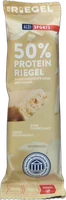
Fotos: Open Food Facts, bearbeitet, CC BY-SA 3.0
je 100 g
- Protein
- 20 g
- Energie
- 366 kcal
- Zucker
- 40 g
Kalorien je 100 g
- Protein80 kcal
- Fett100 kcal
- Kohlenhydrate184 kcal
- davon Zucker160 kcal
- Rest2 kcal
Protein, Fett und Kohlenhydrate ergeben 364 von 366 kcal. Die Summe weicht ab, weil Packungen runden und auch Stoffe mitzählen, die hier nicht stehen.
So entstehen 21 %
20 g
Protein in 100 g
21 %
der Kalorien aus Protein
- Protein
- Fett
- Kohlenhydrate
- davon Zucker
- Wasser und anderes
- Rest
Fett hat 9 kcal je Gramm, Protein und Kohlenhydrate 4, Wasser keine.
Ohne Platz
noch nicht foto-geprüft – nicht wegen der Werte
NährwerteProtein in Eiern, Zucker in Würfelzucker
Nährwerte
Auf einen Blick · je 100 gfür 5 g Proteinfür 10 g Proteinfür 15 g Proteinfür 20 g Proteinfür 25 g Proteinfür 30 g Proteinfür 35 g Proteinfür 40 g Proteinfür 45 g Proteinfür 50 g Proteinfür 55 g Proteinfür 60 g Protein
Erklärung: Woher die Bezugswerte?
1 Ei (Größe M) ≈ 6,1 g Protein: 49,28 g ohne Schale × 12,4 g Protein je 100 g. Mittel aus 24 gewogenen Eiern mit 52–61 g (Größe M: 53 bis unter 63 g). Quellen: USDA FoodData Central, LGL Bayern.
1 Würfelzucker = 3 g: Region Hannover, Zuckerliste.
Gerechnet von parelo, auf halbe Eier und ganze Würfel gerundet. Nur ein Größenvergleich, kein Vergleich der Proteinqualität.
- Energie366 kcal 1.531 kJ92 kcal 383 kJ183 kcal 766 kJ275 kcal 1.149 kJ366 kcal 1.531 kJ458 kcal 1.914 kJ549 kcal 2.297 kJ641 kcal 2.680 kJ732 kcal 3.063 kJ824 kcal 3.446 kJ915 kcal 3.828 kJ1.007 kcal 4.211 kJ1.098 kcal 4.594 kJ366 kcal 1.531 kJ, Proteinriegel in allen Ketten, wenig kcal zuerst
- Protein20 g5,0 g10 g15 g20 g25 g30 g35 g40 g45 g50 g55 g60 g20 g, Proteinriegel in allen Ketten, viel Protein zuerst
- Fett11 g2,8 g5,6 g8,3 g11 g14 g17 g19 g22 g25 g28 g31 g33 g11 g, Proteinriegel in allen Ketten, wenig Fett zuerst
- davon gesättigt3,0 g0,8 g1,5 g2,3 g3,0 g3,8 g4,5 g5,3 g6,0 g6,8 g7,5 g8,3 g9,0 g3,0 g
- Kohlenhydrate46 g12 g23 g35 g46 g58 g69 g81 g92 g104 g115 g127 g138 g46 g
- davon Zucker40 g10 g20 g30 g40 g50 g60 g70 g80 g90 g100 g110 g120 g40 g, Proteinriegel in allen Ketten, wenig Zucker zuerst
- Ballaststoffekeine Angabekeine Angabekeine Angabekeine Angabekeine Angabekeine Angabekeine Angabekeine Angabekeine Angabekeine Angabekeine Angabekeine Angabekeine Angabekeine Angabe
- Salzkeine Angabekeine Angabekeine Angabekeine Angabekeine Angabekeine Angabekeine Angabekeine Angabekeine Angabekeine Angabekeine Angabekeine Angabekeine Angabekeine Angabe
Quelle: Open Food Facts, Stand 14.11.2026 · kJ umgerechnet von parelo · Fehler melden
Mehr Protein pro Kalorie
Proteinriegel
Worauf kommt's dir an?
Mehr Proteinriegel
Zur Rangliste: Proteinriegel
Fotos: Open Food Facts, bearbeitet, CC BY-SA 3.0
Mehr entdecken
Kurz gefragt
Wie schätzt parelo die Sättigung?1,5 von 10
Sättigung: 1,5 von 10 · geschätzt.
Ballaststoffe fehlen in unseren Daten. Der echte Wert kann höher sein.
- Protein1,8 Punkte5,5 g · kein Höchstwert, 20 g = 4 Punkte
- Ballaststoffe0,0 von 2keine Angabe in unseren Daten, als 0 gezählt
- Menge0,6 von 427 g/ml
- ZuckerAbzug 0,910,9 g, ohne auswertbare Zutatenliste ganz gezählt · zieht bis zu 2 ab
zusammen 1,5 von 10
Geschätzt aus Menge, Protein, Ballaststoffen und Zucker je 100 kcal. Nicht gemessen. So schätzt parelo
Wie viel Protein hat dieses Produkt?
20 g je 100 g laut Open Food Facts. Das sind 21 von 100 kcal aus Protein.
Allergene
Allergene laut Open Food Facts: nicht erfasst. Es gilt die Packung.
So rechnet parelo
Kategorie: Proteinriegel, zugeordnet nach dem Produktnamen.
Der Ring zeigt, wie viel der Kalorien aus Protein kommt: 20 g × 4 kcal = 80 von 366 kcal, also 21 %. Gerechnet mit den ungerundeten Werten, dann abgerundet.
Noch nicht foto-geprüft.
Methodik 2026.11-m0.9.23, Daten von Open Food Facts, Stand 14.11.2026. So rechnet parelo
Fehler melden
Hersteller und Händler: Nährwertfehler bitte mit Foto der Packung an info@parelo.de. Dauerhaft korrigieren lassen sich die Daten über die Hersteller-Plattform von Open Food Facts