- Merkmale
- ohne Zutatenliste
Erklärung: Woher?
Ohne Zutatenliste bei Open Food Facts: Kollagen, Süßungsmittel und vegan prüfen wir hier nicht.
Mehr Protein pro Kalorie
in allen Ketten
in Proteinpulver
Die Besten je Sorte, foto-geprüft
- Kristall Whey Isolat ApfelsaftRühls BestesFür 20 g Protein: 80 statt 107 kcal
- Isoclear Green Tea Honey FlavorESN · 809 gFür 20 g Protein: 84 statt 107 kcal
- 100% Casein Protein – Strawberry CreamBody Attack · 900 gFür 20 g Protein: 85 statt 107 kcal
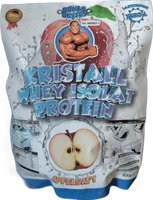
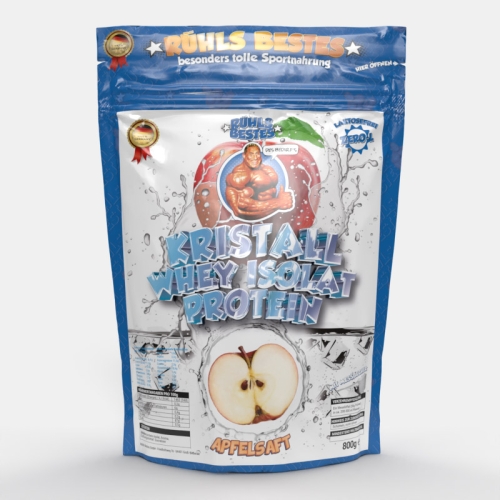
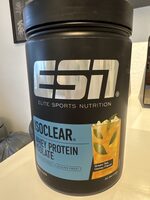

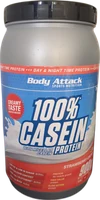

Fotos: Open Food Facts, teils bearbeitet, CC BY-SA 3.0 · Bilder: ruehl24.de, metasport.de, body-attack.de
je 100 g
- Protein
- 73 g
- Energie
- 392 kcal
- Zucker
- 7,4 g
Kalorien je 100 g
- Protein294 kcal
- Fett68 kcal
- Kohlenhydrate30 kcal
- davon Zucker30 kcal
So entstehen 74 %
73,4 g
Protein in 100 g
74 %
der Kalorien aus Protein
- Protein
- Fett
- Kohlenhydrate
- davon Zucker
- Wasser und anderes
Fett hat 9 kcal je Gramm, Protein und Kohlenhydrate 4, Wasser keine.
Ohne Platz
noch nicht foto-geprüft – nicht wegen der Werte
NährwerteProtein in Eiern, Zucker in Würfelzucker
Nährwerte
Auf einen Blick · je 100 gje Portion (30 g)für 15 g Proteinfür 20 g Proteinfür 25 g Proteinfür 30 g Proteinfür 35 g Proteinfür 40 g Proteinfür 45 g Proteinfür 50 g Proteinfür 55 g Proteinfür 60 g Protein
Erklärung: Woher die Bezugswerte?
1 Ei (Größe M) ≈ 6,1 g Protein: 49,28 g ohne Schale × 12,4 g Protein je 100 g. Mittel aus 24 gewogenen Eiern mit 52–61 g (Größe M: 53 bis unter 63 g). Quellen: USDA FoodData Central, LGL Bayern.
1 Würfelzucker = 3 g: Region Hannover, Zuckerliste.
Gerechnet von parelo, auf halbe Eier und ganze Würfel gerundet. Nur ein Größenvergleich, kein Vergleich der Proteinqualität.
- Energie392 kcal 1.640 kJ118 kcal 492 kJ27 kcal 112 kJ53 kcal 223 kJ80 kcal 335 kJ107 kcal 447 kJ134 kcal 559 kJ160 kcal 670 kJ187 kcal 782 kJ214 kcal 894 kJ240 kcal 1.006 kJ267 kcal 1.117 kJ294 kcal 1.229 kJ320 kcal 1.341 kJ392 kcal 1.640 kJ, Proteinpulver in allen Ketten, wenig kcal zuerst
- Protein73 g22 g5,0 g10 g15 g20 g25 g30 g35 g40 g45 g50 g55 g60 g73 g, Proteinpulver in allen Ketten, viel Protein zuerst
- Fett7,6 g2,3 g0,5 g1,0 g1,5 g2,1 g2,6 g3,1 g3,6 g4,1 g4,6 g5,2 g5,7 g6,2 g7,6 g, Proteinpulver in allen Ketten, wenig Fett zuerst
- davon gesättigt5,1 g1,5 g0,3 g0,7 g1,0 g1,4 g1,7 g2,1 g2,4 g2,8 g3,1 g3,5 g3,8 g4,2 g5,1 g
- Kohlenhydrate7,6 g2,3 g0,5 g1,0 g1,5 g2,1 g2,6 g3,1 g3,6 g4,1 g4,6 g5,1 g5,7 g6,2 g7,6 g
- davon Zucker7,4 g2,2 g0,5 g1,0 g1,5 g2,0 g2,5 g3,0 g3,5 g4,0 g4,6 g5,1 g5,6 g6,1 g7,4 g, Proteinpulver in allen Ketten, wenig Zucker zuerst
- Ballaststoffekeine Angabekeine Angabekeine Angabekeine Angabekeine Angabekeine Angabekeine Angabekeine Angabekeine Angabekeine Angabekeine Angabekeine Angabekeine Angabekeine Angabekeine Angabe
- Salzkeine Angabekeine Angabekeine Angabekeine Angabekeine Angabekeine Angabekeine Angabekeine Angabekeine Angabekeine Angabekeine Angabekeine Angabekeine Angabekeine Angabekeine Angabe
Portion laut Packung (Open Food Facts)
Quelle: Open Food Facts, Stand 17.11.2026 · kJ und Portion umgerechnet von parelo · Fehler melden
Mehr Protein pro Kalorie
Proteinpulver
Worauf kommt's dir an?
Mehr Proteinpulver
Zur Rangliste: Proteinpulver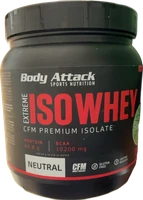
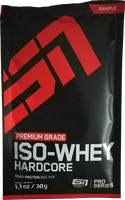
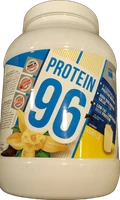
Fotos: Open Food Facts, teils bearbeitet, CC BY-SA 3.0 · Bilder: ruehl24.de, metasport.de
Mehr entdecken
Kurz gefragt
Wie schätzt parelo die Sättigung?4,1 von 10
Sättigung: 4,1 von 10 · geschätzt.
Ballaststoffe fehlen in unseren Daten. Der echte Wert kann höher sein.
- Protein3,9 Punkte18,7 g · kein Höchstwert, 20 g = 4 Punkte
- Ballaststoffe0,0 von 2keine Angabe in unseren Daten, als 0 gezählt
- Menge0,4 von 426 g/ml
- ZuckerAbzug 0,21,9 g, ohne auswertbare Zutatenliste ganz gezählt · zieht bis zu 2 ab
zusammen 4,1 von 10
Geschätzt aus Menge, Protein, Ballaststoffen und Zucker je 100 kcal. Nicht gemessen. So schätzt parelo
Wie viel Protein hat dieses Produkt?
73 g je 100 g laut Open Food Facts. Das sind 74 von 100 kcal aus Protein.
Allergene
Allergene laut Open Food Facts: nicht erfasst. Es gilt die Packung.
So rechnet parelo
Kategorie: Proteinpulver, zugeordnet nach dem Produktnamen und dem Proteingehalt.
Der Ring zeigt, wie viel der Kalorien aus Protein kommt: 73,4 g × 4 kcal = 294 von 392 kcal, also 74 %. Gerechnet mit den ungerundeten Werten, dann abgerundet.
Noch nicht foto-geprüft.
Was Studien zeigen: Wie viel Protein am Tag für Muskelaufbau?
Methodik 2026.11-m0.9.26, Daten von Open Food Facts, Stand 17.11.2026. So rechnet parelo
Fehler melden
Hersteller und Händler: Nährwertfehler bitte mit Foto der Packung an info@parelo.de. Dauerhaft korrigieren lassen sich die Daten über die Hersteller-Plattform von Open Food Facts